
Zambartas Wineries: Indigenous Cypriot Grapes from the Hills of Agios Amvrosios
In the 1980s, working as an oenologist in the Cypriot wine industry, Akis Zambartas spent three years walking old vineyards and collecting cuttings from vines nobody could name. The project recovered twelve indigenous Cypriot grape varieties that centuries of interrupted winemaking had pushed to the edge of disappearance, among them Maratheftiko, Lefkada, Promara and Yiannoudi. The French ampelographer Pierre Galet, who had taught Zambartas at Montpellier, examined and authenticated the findings. In 2006 Akis founded his own winery at Agios Amvrosios, a wine village in the hills northwest of Limassol, and began making wine from the grapes he had spent a career defending.
Zambartas is chosen by people who want Cyprus expressed through its own varieties rather than through familiar international ones, and who are interested in what a small, organically farmed estate can do with grapes that grow almost nowhere else.
Discover the Unparalleled Quality of Zambartas Wineries
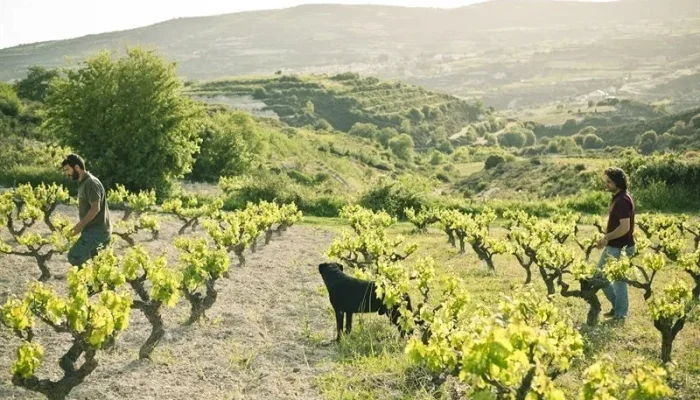
The estate farms over 27 hectares organically, spread across several villages rather than gathered in one block. The higher parcels sit at Mandria and Agios Nikolaos, between 800 and 1,000 metres, where cool nights hold acidity in white grapes through a hot Mediterranean summer. Lower sites around Agios Amvrosios and Pachna run between 550 and 700 metres and supply most of the reds. Annual production is around 150,000 bottles.
Old blocks are still trained in gobelet, the free-standing bush form suited to dry farming, while newer plantings are trellised and spur-pruned. The oldest parcel, Margelina, was planted in 1921 and is one of the few surviving ungrafted centenarian vineyards on the island. Two of the vineyards were certified fully organic by Lacon in 2019.
What makes Zambartas Wineries special
- Founded in 2006 by Akis Zambartas, the first Cypriot oenologist to hold a university qualification in the subject, gained at Montpellier.
- Built on twelve indigenous varieties recovered through his own three-year research project and verified by ampelographer Pierre Galet.
- Over 27 hectares farmed organically at altitudes from 550 to 1,000 metres across the Limassol hills.
- The ungrafted Margelina vineyard, planted in 1921 and still in production.
- Melusine Commandaria, fermented with wild yeast and matured ten years in used oak, without fortification.
The vineyards fall within PDO Krasochoria Lemesou, the appellation covering more than twenty wine villages on the southern flank of the Troodos massif, where limestone soils, terraced slopes and elevation between 600 and 1,000 metres set the conditions. Agios Amvrosios sits among them, close to Pachna, in country given over almost entirely to vines.
The People Behind Zambartas Wineries
Akis Zambartas studied Chemistry at Lyon and Oenology at Montpellier, then spent decades in Cypriot winemaking, latterly as chief oenologist at KEO, before starting the family winery in 2006. His work on the island’s lost varieties earned him membership of the International Academy of Wine. He died some years ago, and the range still carries his choices: the Shiraz-Lefkada blend exists because Lefkada was his grape.
Marcos Zambartas, his son, is the winemaker. He read Chemistry at Imperial College London and took a Master’s in Oenology at the University of Adelaide, a deliberate choice given how closely South Australian conditions resemble Cypriot ones, with further training in Provence and New Zealand. Marleen Zambartas handles the winery’s export markets and its public face.
How Zambartas Wineries began
The research came first and the winery second. By the time Akis planted and contracted his own fruit, he already knew which varieties merited the effort: five in particular stood out from the recovery project, with Maratheftiko the one he considered the finest on the island. The winery building at Agios Amvrosios went up in 2007, and the first wines followed.
The founding decision was to make varietal Cypriot wine at a moment when most of the island’s production still went into bulk and blends. That meant persuading growers to farm for quality rather than tonnage, and it meant accepting the yields that indigenous varieties actually give.
Growing Maratheftiko, the difficult grape
Maratheftiko does not pollinate itself. Its flowers are functionally female, so a compatible variety has to be interplanted among the rows or the vines set no useful crop. Spourtiko is the traditional partner. This one botanical quirk explains why the grape came so close to vanishing: it fruits erratically, yields unpredictably, and rewards nobody working at scale.
Handled properly it repays the trouble. The Zambartas Maratheftiko is picked from high-altitude sites at Pachna, Omodos, Vasa and Agios Therapon, hand-sorted, fermented in stainless steel and matured about a year in oak, mostly used barrels with a proportion of new. It is deeply coloured and full-bodied at 14.5%, with red roses, black cherry, red berries, violets and sweet spice, and medium, silky tannins.
Why this matters
- Twelve indigenous Cypriot varieties documented and returned to commercial cultivation.
- Maratheftiko grown despite its need for a pollinating partner and its unreliable yields.
- A centenarian ungrafted vineyard maintained rather than replanted.
- Organic farming across the estate, with uncultivated buffer zones and restored dry stone terrace walls.
- Commandaria made in tiny volume by the older method, without fortification.
“Zambartas exists because one oenologist went looking for the grapes Cyprus had forgotten, and then built a winery to prove they were worth finding.”
At the Table: How Zambartas Is Drunk in Cyprus
Cypriot eating is communal and slow, built around meze, the charcoal grill and long tables. The wines are made for that setting, which is why the reds carry weight without heaviness and the whites keep their acidity.
- Xynisteri, cool and citrussy, alongside grilled halloumi, salads and pulses
- Maratheftiko with souvla, the slow-turned charcoal roast that anchors a Cypriot Sunday
- Shiraz-Lefkada with lamb, game or a properly made moussaka
- The Koukouvagia range for everyday tables, lighter in body and built around fruit
- Melusine Commandaria at the close of a meal, poured small
Commandaria has a particular place in this. It is the island’s historic sweet wine, made from sun-dried grapes in the villages north of Limassol, and it is treated as an occasion wine: opened for a name day, a christening or a visitor, and served in small glasses.
Zambartas Wineries: What Sets These Cypriot Wines Apart
The distinctions here are agricultural and technical rather than decorative. Which grape, grown at what height, fermented in what vessel, held for how long.
| Quality | Description |
|---|---|
| Terroir | Limestone soils and terraced slopes in the Limassol hills, with parcels from 550 metres up to 1,000 metres at Mandria and Agios Nikolaos. |
| Variety | Indigenous Cypriot grapes at the centre of the range: Xynisteri, Maratheftiko, Promara, Yiannoudi, Mavro and Lefkada, with Shiraz, Mataro, Sémillon and Sauvignon Blanc used in blends. |
| Vinification | Stainless steel fermentation for freshness, with a small oak-fermented portion in the Xynisteri and different temperatures used to draw out a wider aromatic range. |
| Ageing | Around one year in oak for the Maratheftiko and the Shiraz-Lefkada, the latter across new, second-use and third-use barrels. Melusine Commandaria spends ten years in used oak. |
| Appellation | The vineyards lie within PDO Krasochoria Lemesou, and Melusine is bottled as PDO Commandaria. |
Character follows from those decisions. Xynisteri at 13% is light-bodied and crisp, with citrus, white flowers, stone fruit and a note of bergamot. The Shiraz-Lefkada, 80% Shiraz to 20% Lefkada from Agios Amvrosios and Pachna, is full-bodied at 14.5%, with blackberry, vanilla, sweet spice, cardamom and a trace of smoke.
Pairing and Serving Zambartas Wines
These are food wines with clear structure, and a little care in the glass makes the difference.
| Pairing | Why it works |
|---|---|
| Xynisteri with grilled halloumi | The wine's acidity and citrus cut through the salt and the squeaky richness of the cheese. Serve at 8 to 10°C. |
| Maratheftiko with grilled lamb or souvla | Silky medium tannins and dark fruit meet charred fat without either side dominating. Serve at 16 to 18°C. |
| Shiraz-Lefkada with roasted game or truffle pasta | Full body, sweet spice and smoke stand up to gamey meat and earthy aromatics. An hour in a decanter opens younger bottles. |
| Melusine Commandaria with dried fruit, nuts and hard cheese | Its dried fruit, honey and orange peel notes echo the food, while the acidity keeps the sweetness in check. Serve lightly chilled, around 12°C. |
| Cellaring | The Maratheftiko develops over seven to eight years in bottle and the Shiraz-Lefkada over eight to ten. Store on their side, cool, dark and still. |
Once opened, the dry wines are at their best within a day or two. Commandaria, given its age and concentration, keeps far longer in a resealed bottle in the fridge.
Sustainable and Ethical Practices at Zambartas Wineries
At Zambartas Wineries the vineyards are treated as part of a wider ecosystem rather than as a monoculture, and they are farmed organically on that basis. Uncultivated buffer strips are left in place for biodiversity, and the traditional dry stone terrace walls that hold the slopes are repaired rather than bulldozed.
The commitment extends beyond the rows. Two vineyards were certified fully organic by Lacon in 2019, and in August 2025 the winery achieved ISO 14064 certification, the greenhouse gas accounting standard, through the EU-funded I-STARS project.
Their approach
Here the agriculture and the ambition are the same thing: keeping an ungrafted vineyard planted in 1921 alive, interplanting pollinators so a difficult indigenous red can set fruit at all, farming organically across more than 27 hectares of terraced limestone, restoring the stone walls that make those terraces possible, and holding a Commandaria in barrel for a decade to make roughly a thousand litres a year. Marcos Zambartas makes the wine his father’s research made possible.
Learn more about Zambartas Wineries
Award-Winning Cypriot Wines
Zambartas Wineries has been recognised consistently at international level. At the Decanter World Wine Awards 2014, the Maratheftiko 2011 and 2012 both took Silver, with Bronze for the Xynisteri 2013 and the Shiraz-Lefkada 2012. At the 23rd Thessaloniki International Wine Competition in February 2023, Melusine Commandaria 2011 won Gold with 95 points and placed eighth overall, while the Xynisteri 2022 took Silver. The same Commandaria scored 92 points and a Silver at the Decanter World Wine Awards 2023, and the Single Vineyard Xynisteri was named best white wine of Cyprus at the Gastronomos awards in 2023.
Explore the Zambartas Collection
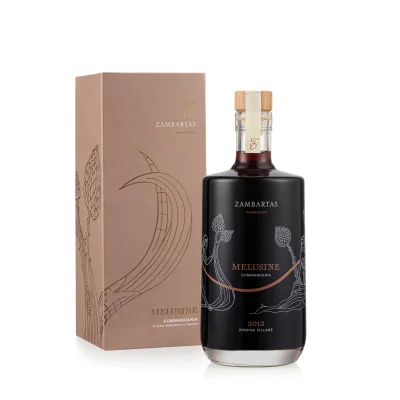
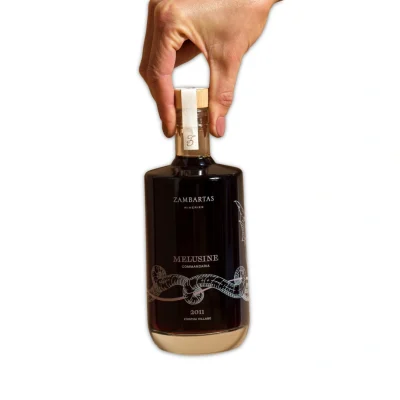
Zambartas Melusine Commandaria PDO Cyprus Sweet Wine, 500ml
The world's oldest wine | Aged 10 Years in Oak
Original price was: 95,00 €.88,00 €Current price is: 88,00 €.Frequently Asked Questions
Frequently Asked Questions About Zambartas Wineries
What is Zambartas Wineries?
A family winery at Agios Amvrosios in the Limassol hills of Cyprus, founded in 2006 by the oenologist Akis Zambartas and now run by his son Marcos as winemaker, with Marleen Zambartas managing exports. It farms over 27 hectares organically and produces around 150,000 bottles a year.
Which grape varieties do they work with?
Principally indigenous Cypriot varieties: Xynisteri, Maratheftiko, Promara, Yiannoudi, Mavro and Lefkada. Shiraz, Mataro, Sémillon and Sauvignon Blanc appear in blends, most notably the 80% Shiraz, 20% Lefkada bottling.
What was Akis Zambartas known for?
A three-year research project in the 1980s that identified and documented twelve indigenous Cypriot grape varieties which had almost disappeared. The findings were authenticated by Pierre Galet of Montpellier, and the work brought Zambartas membership of the International Academy of Wine.
Why is Maratheftiko difficult to grow?
It is not self-pollinating. A compatible variety, traditionally Spourtiko, must be planted among the vines, and even then yields are irregular. That difficulty is why the grape nearly disappeared from commercial cultivation.
What is Commandaria?
Cyprus's historic sweet wine, produced under its own PDO from sun-dried grapes in a defined area north of Limassol. Zambartas makes Melusine Commandaria from Xynisteri dried on elevated beds with partial shading, fermented with wild yeast, then held ten years in used oak barrels and bottled without fortification.
Are the wines organic?
The estate is farmed organically throughout, and two vineyards received full organic certification from Lacon in 2019. The winery also holds ISO 14064 certification for greenhouse gas accounting, achieved in August 2025.
How long will the wines keep?
The Maratheftiko develops over seven to eight years in bottle and the Shiraz-Lefkada over eight to ten. Commandaria, already matured a decade in barrel, is stable for far longer and needs no further cellaring before opening.
Our Content

The Art of Giving Well: Luxury Mediterranean Gifts for the Health-Conscious Gourmet


Premium Mediterranean Olive Oils & Gourmet Products | Gourmet Groceries

5+1 Italian Ingredients (and How to Choose Mediterranean Premium Quality)

What Is High-Phenolic Olive Oil, and Why Should You Care?

Why Natural Food Is Better Than Supplements

What Blue Zones Teach Us About Food, Community, and the Way We Live

What To Eat After Fasting, The Mediterranean Super Breakfast

Celebrating 10 Years of Gourmet Groceries: A Legacy of Quality, Wellness & Healthy Living

A Guide to High-Phenolic Medicinal Olive Oil

Corporate Gifting Redefined: Luxury Christmas Gifts & Premium Hampers from Cyprus to the World

Atsas Olive Oil: Our Visit to Cyprus’ Award-Winning Organic Olive Farm

Why the Mediterranean Diet Is Good for Your Heart
The Gourmet Groceries Philosophy
Supporting local farms
At Gourmet Groceries, we are a small, family-run business. Our dedication remains to supporting local farms and delivering the finest products to our customers. We partner with producers who share our values, helping preserve traditional farming practices and promoting environmental responsibility.
Our commitment to quality
Our mission is to bring you exceptional, ethically sourced, and delicious products while supporting local communities and protecting agricultural heritage. We select every product we offer based on strict quality standards. With this practice we ensure that you get both the taste and nutrition you deserve.
When you choose Gourmet Groceries, you’re not just buying outstanding products. You’re also helping us support sustainable farming and local communities.
Learn more here.